Digital Mirror of your Construction Site
What is it?
Not a BIM model. Not a dashboard.
A living replica of your project's operational reality.

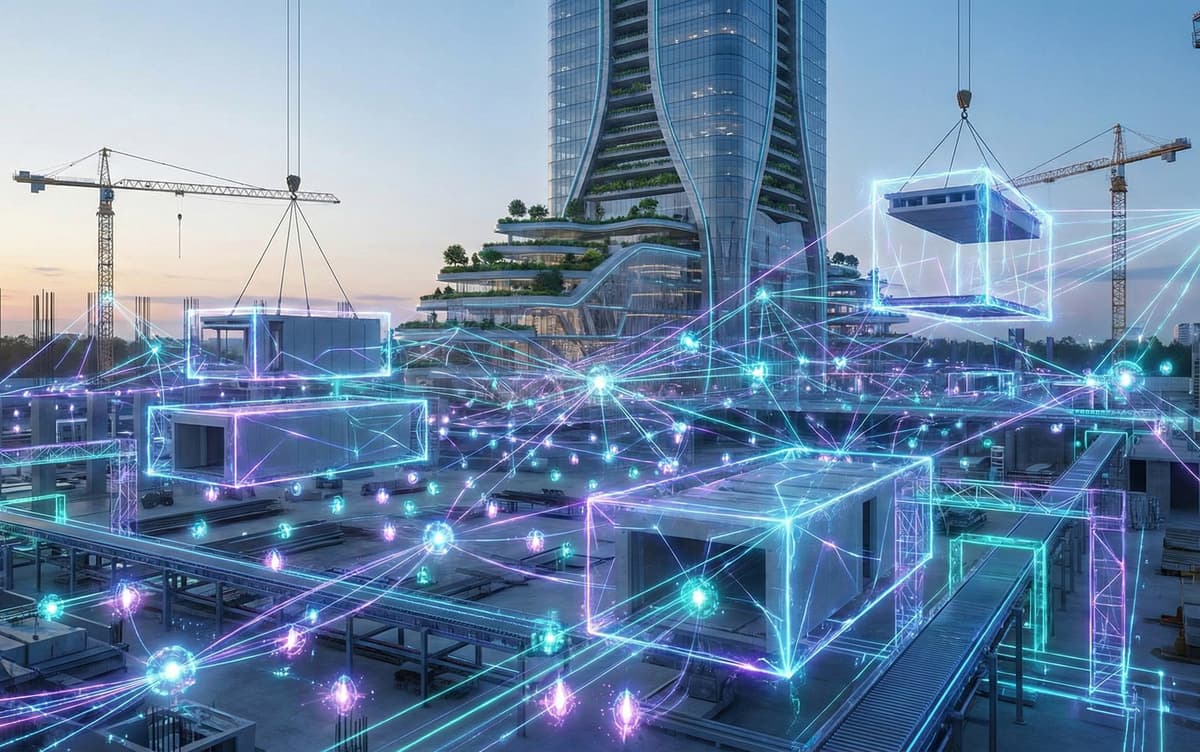
A Supply Chain Digital Twin is a continuously updated virtual model of everything that feeds your construction site materials in transit, workforce on the ground, equipment on site, and the communications that connect them all.

Unlike a BIM model, which captures design intent and freezes the moment construction begins, IntelliByld's Digital Twin captures execution reality and updates itself in real time as that reality changes.

Unlike a dashboard, which shows you what has already happened, the Digital Twin knows what is about to happen — because it is watching every signal across your supply chain, your site communications, and your operational schedule simultaneously.
image
Supply chain digital twin
What IntelliByld's Digital Twin Actually Is
Every material. Every supplier. Every shipment. Live.
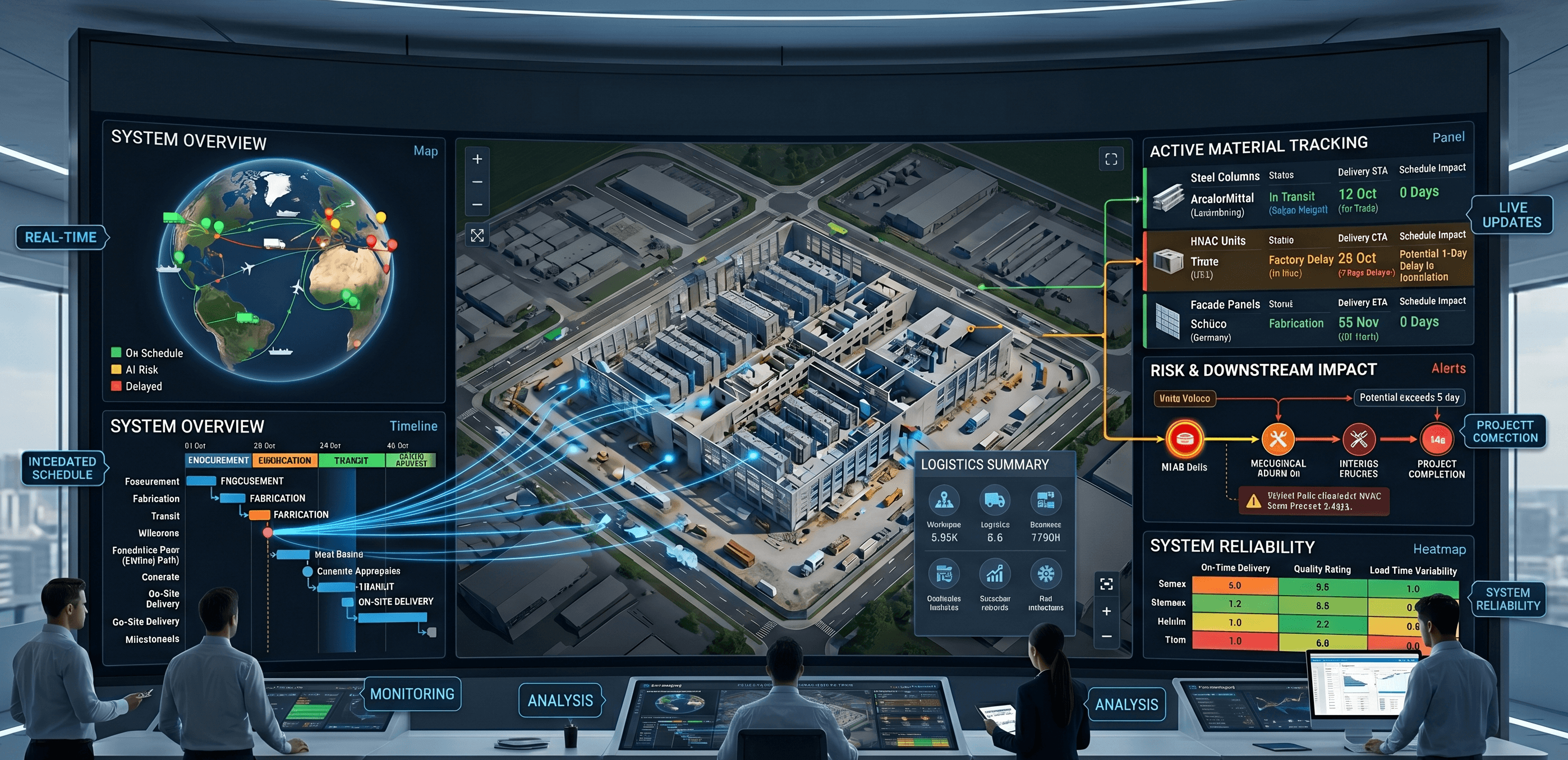
IntelliByld's Supply Chain Digital Twin is a continuously updated virtual model of your project's entire material and supplier ecosystem.

It links every supplier, shipment, delivery, and procurement event to your master project schedule — so you always know which materials are on track, which are at risk, and what the downstream impact will be if something goes wrong.

Material-First Scheduling

Automatically adjust construction sequences based on real-time manufacturer lead times and global shipping data, ensuring you never schedule a crew for materials that haven't left the port

Live Chain-of-Custody

Maintain a continuous, automated audit trail for every critical asset, providing instant verification of quality, origin, and compliance at every handoff.

Autonomous Conflict Resolution

Agents detect and resolve scheduling conflicts between material arrivals and site labor availability before the gate opens, preventing expensive site congestion.

FAQs
Frequently Asked Questions

Clear answers about what a Supply Chain Digital Twin actually is, how it differs from BIM and dashboards, and how IntelliByld's twin stays accurate across an active construction programme

What is a Supply Chain Digital Twin in construction?

A Supply Chain Digital Twin is a continuously updated virtual model of everything that feeds a construction site — materials in transit, workforce on the ground, equipment on site, and the communications that connect them. It links every supplier, shipment, delivery, and procurement event to the master project schedule, so the project team can see in real time which materials are on track, which are at risk, and what the downstream impact will be if something goes wrong. Unlike static models, it updates itself as execution reality changes.

How is a Digital Twin different from a BIM model?

A BIM model captures design intent — the geometry, specifications, and quantities of what is being built — and freezes the moment construction begins. A Digital Twin captures execution reality and keeps updating as that reality changes. BIM tells you what should be built. The Digital Twin tells you what is actually happening: which steel has cleared the port, which crew is mobilised, which delivery is statistically overdue. The two work together — IntelliByld's Digital Twin reads BIM takeoffs as one of its inputs, then layers live operational data on top.

How is a Digital Twin different from a construction dashboard?

A dashboard shows what has already happened — yesterday's deliveries, last week's progress, the budget burn to date. A Digital Twin watches what is about to happen, because it is monitoring every signal across the supply chain, the site, and the schedule simultaneously. The difference is between reading a report and looking through a windshield. Dashboards are passive views. The Digital Twin is an active model that agents can reason against and act on.

What data sources feed IntelliByld's Digital Twin?

The twin ingests data continuously from BIM models (Revit, Navisworks, IFC), ERPs (SAP, Oracle), construction management platforms (Procore), supplier emails and WhatsApp messages parsed by the Construction-Trained SLM, live shipping feeds and vessel tracking, port clearance data, last-mile GPS, IoT sensors on site, and the master project schedule. All of these update in real time, so the twin reflects current operational reality rather than a periodic snapshot.

Does the Digital Twin replace our existing BIM, ERP, or scheduling tools?

No. The Digital Twin sits above the systems already in use and coordinates between them. BIM remains the source of truth for design. The ERP remains the system of record for procurement and finance. The scheduler remains the master plan. The Digital Twin connects them, fills the gaps between them, and gives the agents a single coherent operational model to reason against.

How accurate is the Digital Twin compared to actual site conditions?

Accuracy depends on the quality of connected data sources, but the twin is designed to be self-correcting. When a sensor reading, a supplier confirmation, and a GPS feed disagree, the system flags the discrepancy and prioritises the most reliable signal based on historical accuracy. Anomalies that would normally take days to surface in a manual reconciliation appear within minutes, and the twin's confidence level on every data point is exposed so the project team knows what to trust.

Does using a Digital Twin require restructuring our project workflows?

No. The Digital Twin is designed to onboard alongside an in-flight project rather than requiring a new way of working. It reads from systems your team already uses and produces outputs — situation reports, re-sequenced schedules, RFQ shortlists — that fit existing workflows. Teams typically see value within the first delivery cycle without retraining or re-tooling.